
Celebrating Direct Support Professional Week
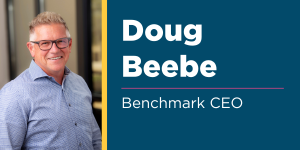
By Doug Beebe, Chief Executive Officer
Direct Support Professionals (DSPs) are the beating heart of a system that assists people with intellectual and developmental disabilities (IDD) to live in communities of their choosing. For more than 50 years, our nation has been moving toward a vision in which people with disabilities have the opportunity to live meaningful lives in the communities they call home. The passage of the Rehabilitation Act of 1973 helped establish important protections against disability discrimination. In 1999, the U.S. Supreme Court’s landmark decision in Olmstead v. L.C. further advanced the principle that people with disabilities should receive services in the most integrated setting possible.
That decision helped drive a movement to serve people in community settings rather than institutions and made the role of DSPs essential. DSPs helped turn the promise of community inclusion into everyday reality through job responsibilities such as passing medications, preparing specialized diets, assisting with hygiene, supporting time spent in the community, and teaching new skills.
But, the role goes far beyond that. DSPs build relationships. They learn what matters to each person. They celebrate successes, provide encouragement when things are difficult, and often become the most predictable and trusted people in someone’s life.
According to the American Network of Community Options and Resources (ANCOR), approximately 1.3 million DSPs across the United States support about 7 million people in community settings. The importance of this workforce became especially visible during the COVID-19 pandemic, when DSPs provided essential support. Yet, even as we recognize how important DSPs are, the profession continues to face significant challenges. The federal government still lacks a specific job classification for DSPs, and community inclusion is at another important moment.
In June, the U.S. Department of Justice issued a memo that takes a different position on Olmstead than it has in the past, stating that the Rehabilitation Act and Americans with Disabilities Act do not require states to provide services in integrated community settings, and essentially putting community-based living for people with IDD at risk.
At Benchmark Human Services (Benchmark), we believe that people with disabilities deserve the opportunity to live, work, and participate in their communities. DSPs make those opportunities possible. Benchmark’s 1,700+ DSPs serve more than 2,000 individuals with IDD in residential and day programs across the country. Our work would literally not be possible without DSPs.
While the future of community-based services may face uncertainty, the value of the people doing this work has never been clearer. DSPs are more than caregivers. They are teachers, advocates, problem-solvers, and trusted partners. During Direct Support Professional Recognition Week, September 13-19, we invite you to join us in recognizing, celebrating, and thanking DSPs in our community.
Every day, DSPs help people with disabilities live as independently as possible, be included in their community, and reach their full potential. What could be more important?